
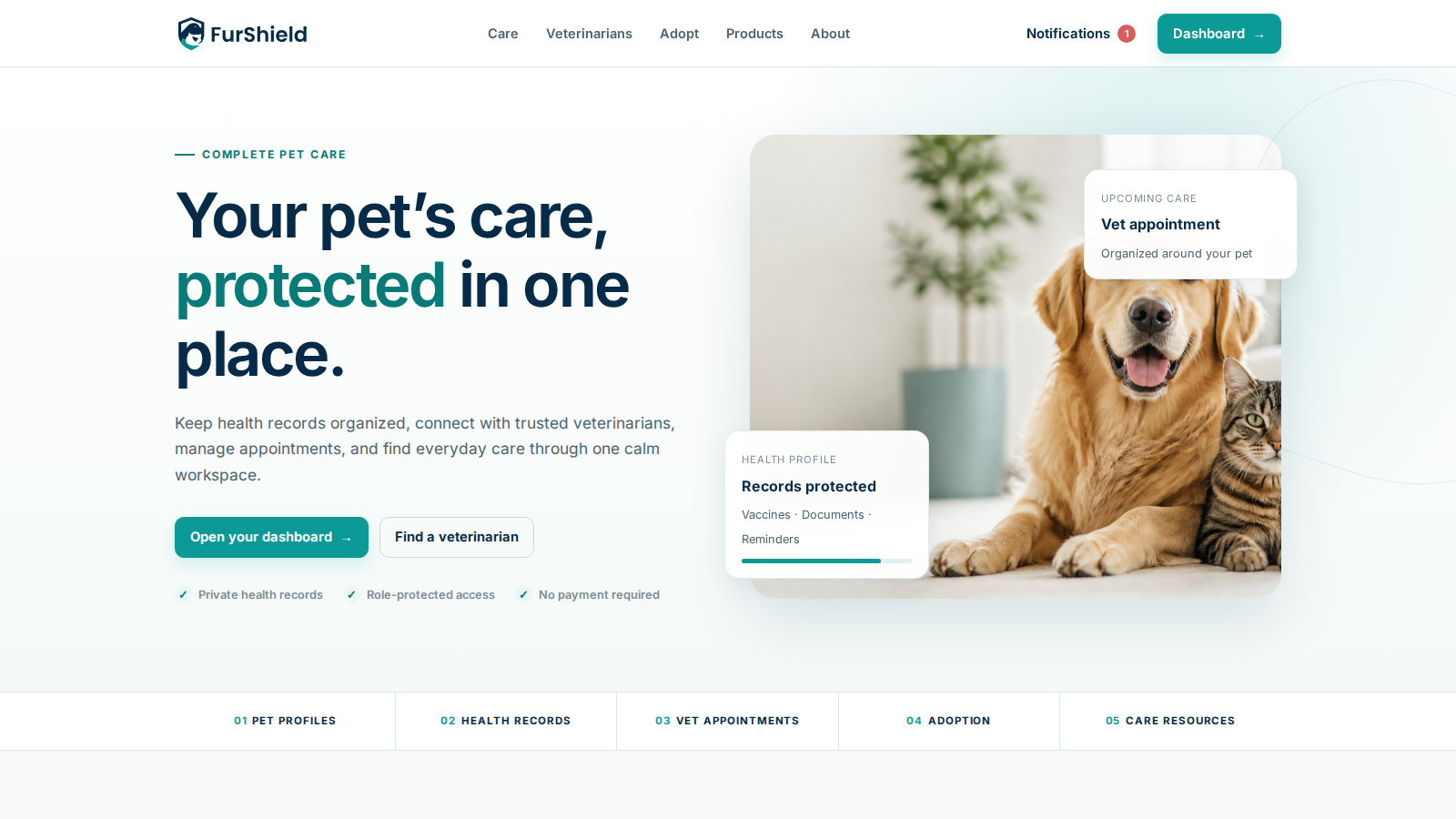
FurShield demonstrates a role-based pet-care platform with owner, veterinarian and shelter workflows, records, appointments and public discovery. The case study shows how private dashboards and public discovery fit together.
02 / Service
A custom web application supports a recurring task or business process through a browser. SaaS product development adds the product structure needed for users to access and manage an ongoing software service.
Discuss this serviceConsider a custom application when repeated work depends on accounts, permissions, shared records or a workflow that existing tools cannot support well. An internal dashboard, customer portal or focused SaaS product starts with the task users need to complete.
A customer portal serves a defined relationship with your customers; an internal system supports your team. A SaaS MVP is a first release of an ongoing software product. These can share technical foundations while needing different onboarding, support and operating decisions.
To choose the right starting point, compare a website, web app and SaaS product against the work your users need to complete.
Turn the core workflow into examples that can be reviewed before development. The first-release specification should make the useful outcome clear without treating every possible feature as essential.
Specify role permissions, data retention, migration needs, integration limits and operational ownership early. Billing, multi-tenancy, external APIs and reporting each introduce different implementation and testing requirements.
A custom application is not automatically the right choice. If an existing tool can meet the requirements with less maintenance, that trade-off should be considered before a build.
If your application includes document handling or other repeated information tasks, explore AI agents for business: use cases, costs and build decisions to assess where fixed rules, AI and human review each fit.
Agree ownership and usage rights for the application code, interface and data in the project contract, along with any third-party licences. Define who controls hosting and connected accounts and who is responsible for operation after launch.
Handover should specify access, setup and operating guidance, known integration dependencies and the agreed acceptance results. Maintenance, monitoring, backups and future feature work need assigned responsibilities and a separate agreed scope where applicable.
No. Define the workflow that makes the first release useful, then separate essential features from later improvements. This makes decisions and acceptance testing clearer.
Where those systems provide suitable APIs or approved access. The scope must account for authentication, rate limits, data ownership and how failures will be handled.
Describe the workflow, user roles, existing tools and the result the first release must deliver. Include integration and migration constraints, but do not send private customer records or access credentials through the public enquiry form.
Not necessarily. Those are separate product decisions. Include them only where the business model requires them, with explicit access, data-separation and operating requirements.
What we can deliver
Supporting services
Start a conversation
Share what you are planning, the business need behind it and where you need support.